High-energy cats need more than attractive packaging. They need movement, choice, and safe opportunities to chase. This explains why are automatic pet toys good for high energy cats, especially in indoor homes where windows, furniture, and routines limit natural hunting behavior. The AAFP and ISFM Feline Environmental Needs Guidelines identify play and simulated predatory activity as important parts of feline welfare. Automatic toys can support these needs through rotating feathers, unpredictable movement, and short chase sequences.
The demand is also commercially significant. The American Pet Products Association’s 2024 National Pet Owners Survey reported that approximately 49.6 million U.S. households owned cats. That growing market has encouraged manufacturers in China to develop quieter motors, rechargeable designs, adjustable speeds, and motion sensors. Useful details matter. A well-designed toy may move across a rug, pause behind a chair, then restart when the cat approaches. That creates engagement without requiring constant human control.
Dr. Mikel Delgado, a certified cat behavior consultant and feline welfare expert, has said, “Play is a great way to enrich your cat’s life and also a great way to bond with your cat.” Automatic toys support that principle, but they should not replace interaction. Some cats lose interest quickly. Others become frustrated by loud sounds or repetitive patterns. Owners still need to observe body language, inspect small parts, and rotate toys regularly. The best product is not always the fastest one. It is the one that safely matches a cat’s energy, preferences, and daily environment.
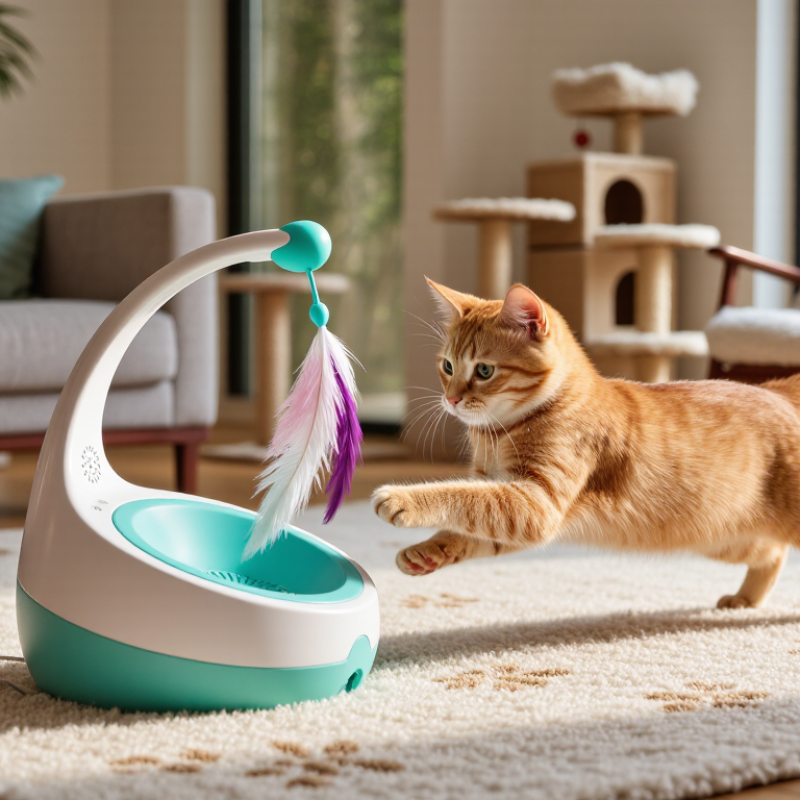
Why Are China Top Automatic Toys Good for High Energy Cats?
High-energy cats differ from quieter cats in movement, attention, and hunting intensity. They may sprint across rooms, attack ankles, or demand play before sunrise. A 2023–2024 APPA National Pet Owners Survey estimates that 46.5 million U.S. households own cats. Yet ownership numbers cannot show how differently each cat behaves.
These cats need regular opportunities to stalk, chase, pounce, and capture. The AAFP and ISFM feline environmental guidelines identify simulated hunting as an important welfare need. Automatic toys can support this pattern by moving unpredictably, changing speed, and keeping paws active when people are busy. Quality manufacturing from China may offer useful motion settings, durable shells, and rechargeable designs at accessible prices. Still, “automatic” does not mean “effective.”
A toy should move like prey, not like a noisy machine. Too much repetition can bore an intelligent cat. Some cats also become frustrated when they never receive a satisfying catch. I have found that short sessions, followed by a small treat or quiet play, feel more natural. Supervision matters. Batteries, loose parts, and damaged feathers require regular checks. High-energy cats are different, but their needs are not identical. One cat may love a rolling ball; another may ignore it completely.
High-energy cats need more than a toy that simply rolls across the floor. China’s top automatic cat toys often combine unpredictable movement with adjustable play modes.
Some change direction suddenly, while others mimic small prey through spinning, bouncing, or hiding actions. This variation can keep an active cat watching, chasing, and pawing for longer periods.
A useful feature is a built-in motion sensor. It can start play when a cat approaches and pause during quiet periods.
Timers also help prevent overstimulation and save battery power. Many models use rechargeable batteries, which reduce the need for frequent replacements. A quiet motor matters, especially in small apartments. Loud buzzing may frighten cautious cats or disturb people nearby.
Durability deserves close attention.
Strong plastic, rounded edges, and securely covered moving parts can reduce common household risks.
Easy-to-clean surfaces are practical after contact with fur, dust, or saliva. In my experience, adjustable speed is more valuable than excessive movement.
A toy that moves too fast may frustrate a cat instead of engaging it. No toy is perfect. Some sensors miss movement, and battery life can vary.
Owners should inspect the toy before each session and remove loose parts immediately. Even the best automatic toy works better when paired with short human-led play and regular observation.
High-energy cats need more than noise and flashing lights. They need movement that resembles hunting. A suitable automatic toy can imitate stalking, chasing, pouncing, and short pauses. These patterns encourage natural physical and mental activity. The 2022 State of Pet Obesity Report estimated that 61% of U.S. cats were overweight or obese. Regular play may support healthier weight control, although it cannot replace veterinary care or diet management.
Well-designed automatic toys from China can offer rotating paths, unpredictable pauses, and adjustable speeds. These details keep an active cat watching, crouching, and sprinting across the room. APPA’s 2023–2024 National Pet Owners Survey counted about 46.5 million U.S. cat-owning households. That scale highlights a practical need for safe, repeatable enrichment. However, some cats ignore moving balls after two minutes. That is normal. The toy may be too loud, too fast, or simply boring. A rotating schedule works better than leaving it active all day. Cats need recovery time, too.
Tips: Choose quiet motors, secure battery covers, and smooth edges. Start with five-minute sessions. Let the cat catch the toy sometimes. Add a small food reward afterward, if appropriate. Inspect loose feathers and broken parts daily. Automatic play is helpful, but human interaction remains important. A wand session can complete the hunting sequence better than a machine alone.
Why Are China Top Automatic Toys Good for High Energy Cats?
High-energy cats need movement, but excitement should not compromise safety. In my experience, the best automatic toys use smooth edges, secure battery covers, and sturdy materials. These details matter when a cat bites, kicks, or drags the toy across the floor. Reliable products should also provide clear safety information and documented material testing. A stable base prevents sudden tipping during fast play. No toy is completely fail-proof.
Durability is equally important for active cats. Strong stitching, protected wires, and replaceable attachments can extend daily use. Smart design adds more value when it supports natural hunting behavior. Adjustable speeds, random movement, quiet motors, and automatic timers keep play interesting without overwhelming the cat. A toy that pauses after several minutes also reduces heat, noise, and excessive stimulation. I once underestimated noise sensitivity; some cats simply avoid loud mechanisms.
Tips: Inspect the toy before every session. Check for loose parts, cracked plastic, or exposed wiring. Choose a size your cat cannot swallow. Test the lowest speed first, then observe body language. Wide pupils, flattened ears, or sudden retreat may signal stress. Supervise early sessions, even with trusted designs, and replace worn parts promptly. Wet floors can also reduce traction, so place the toy on a dry, level surface.
| Evaluation Dimension | Practical Data or Design Benchmark | Why It Matters for High-Energy Cats | What to Check Before Use |
|---|---|---|---|
| Movement Variety | At least 2–3 movement patterns, such as rolling, rotating, pausing, or changing direction. | Unpredictable movement more closely resembles prey behavior and can reduce boredom during independent play. | Confirm that movement modes are clearly described and that the toy does not become repetitive after a short operating period. |
| Adjustable Speed | A useful design includes at least two speed levels or an automatic speed variation mode. | Different cats have different chase preferences. Adjustable speed allows gradual stimulation instead of constant high-speed activity. | Start with the lowest setting and observe whether the cat can follow, catch, and disengage safely. |
| Play Session Control | Automatic shut-off or timed cycles of approximately 10–20 minutes. | Timed play helps prevent excessive fatigue, overheating, and loss of interest while supporting repeated daily activity. | Choose a model that allows the owner to stop the toy immediately and avoid leaving it running continuously. |
| Battery Performance | Rechargeable models commonly provide several hours of intermittent operation; replaceable-battery models should include a secure battery compartment. | Reliable power supports regular exercise, while secure compartments reduce the risk of battery access or accidental swallowing. | Check charging indicators, battery-compartment screws or locks, cable condition, and operating instructions. |
| Body Materials | Use rigid, impact-resistant plastic for the shell, with smooth edges and no exposed sharp seams. | High-energy cats may bite, scratch, or repeatedly collide with the toy. A strong, smooth body lowers injury and breakage risks. | Inspect all edges, seams, wheels, covers, and attachment points before the first play session. |
| Toy Stability | A wide base, low center of gravity, and sufficient weight to resist frequent tipping during rapid turns. | Stable toys are less likely to slide into unsafe areas or frustrate cats that chase aggressively. | Test the toy on the intended floor surface and keep it away from stairs, balconies, water, and narrow gaps. |
| Detachable Parts | No loose small components should be accessible during normal use; attachments must withstand pulling and biting. | Small parts, strings, feathers, and plastic pieces can become choking or intestinal-obstruction hazards if swallowed. | Supervise toys with strings, feathers, bells, or removable accessories and remove damaged parts immediately. |
| Noise Level | A low-noise motor and soft contact surfaces are preferable; avoid designs with persistent rattling or high-pitched sounds. | Excessive noise may cause stress, avoidance, or sudden unpredictable reactions, especially in noise-sensitive cats. | Run the toy briefly before introducing it and observe the cat's ears, posture, distance, and willingness to approach. |
| Surface Traction | Rubberized wheels or textured contact points can improve traction on smooth floors without leaving sharp exposed edges. | Better traction creates more realistic movement and reduces uncontrolled sliding into furniture or walls. | Check performance on tile, wood, and low-pile carpet, and clean hair or dust from moving parts regularly. |
| Cleaning Design | Smooth, wipeable surfaces and removable non-electronic covers are practical design features. | Frequent cleaning helps remove fur, saliva, dust, and food residue from a toy used by an active cat. | Disconnect power before cleaning, never immerse electronic components, and follow the care instructions. |
| Smart Interaction | Useful functions may include obstacle detection, automatic direction changes, irregular pauses, and inactivity shut-off. | Adaptive behavior creates more varied stimulation and can reduce the need for constant owner intervention. | Test obstacle sensors in an open area and verify that the toy cannot become trapped under furniture. |
| Safety Certification | Electrical products should have traceable safety documentation appropriate to the market where they are sold. | Documentation provides evidence that electrical, charging, and material risks have been considered during product evaluation. | Look for verifiable test information, electrical ratings, instructions, warnings, and supplier contact details rather than relying only on marketing claims. |
| Supervision Requirement | Automatic operation does not eliminate the need for periodic supervision, especially during the first several uses. | Individual cats may chew, dismantle, hide, or misuse a toy in ways that cannot be predicted by the operating design. | Stop use if the toy cracks, overheats, exposes wiring, loses parts, or causes unusual fear or aggressive behavior. |
| Cat-Specific Fit | The toy should be large enough not to be swallowed but small enough for a cat to bat, chase, and manipulate comfortably. | Correct proportions improve engagement while reducing the risk of the toy becoming lodged in the mouth or throat. | Match the toy to the cat's body size, jaw strength, age, mobility, and play style; inspect it after every intense session. |
High-energy cats need more than a moving object. They need safe, changing challenges. The 2024 APPA National Pet Owners Survey reports that 39% of U.S. households own a cat. That large population includes many indoor cats with limited hunting opportunities.
Choosing the right automatic toy starts with your cat’s behavior. For a fast, restless cat, select a toy with adjustable speeds, random movement, and short pauses. These features can imitate prey hiding behind a sofa or darting across a rug. A quiet motor matters too, especially in small apartments. Check for smooth edges, secure parts, and non-toxic materials. Avoid toys with loose strings when you cannot supervise play. A timer is useful because many cats lose interest after ten minutes. Too much repetition can make even an exciting toy boring.
The AAFP and ISFM feline environmental-needs guidelines support opportunities for play, stalking, and problem-solving. Food puzzles or toys with hidden treats can add mental work, but portions must be counted. I once underestimated how quickly a powerful cat could move a lightweight toy across a room. Stability matters. Toys made with large-scale manufacturing experience can offer consistent assembly, but quality still varies between products. Read safety testing details, battery instructions, and cleaning guidance. Do not trust bright lights alone. Observe your cat’s response, adjust the settings, and replace damaged parts promptly.
How to Choose the Right Automatic Toy for Your Cat
High-energy cats generally benefit from several short, active play sessions each day. The practical ranges below help match an automatic toy with a cat’s activity level: choose adjustable speed, unpredictable movement, quiet operation, and safe pause functions for longer engagement. These are general guidance ranges, not medical requirements; age, health, temperament, and indoor space should also be considered.
Guidance basis: feline-enrichment recommendations commonly favor frequent interactive play, short sessions, and opportunities to stalk, chase, pounce, and capture. Always supervise new toys and remove damaged parts.
They imitate hunting through chasing, hiding, spinning, bouncing, and sudden pauses. These actions encourage stalking, pouncing, and short bursts of running. Cats still need rest.
Choose adjustable speed, changing directions, and unpredictable pauses. A slow setting suits cautious cats. Faster movement may excite active cats, but it can also cause frustration. Too much speed is not always better.
Motion sensors can start play when a cat approaches. Timers pause the toy during quiet periods and conserve battery power. Scheduled sessions are better than nonstop activity. The sensor may miss movement sometimes.
Rechargeable batteries reduce frequent replacements and support regular play. Owners should check the charging condition and battery cover often. Secure covers matter because cats may bite or drag the toy. Never ignore damage.
Look for smooth edges, sturdy materials, covered moving parts, and protected wires. The toy should sit firmly on a dry, level floor. Check for cracked plastic, loose feathers, or exposed wiring before every session. Remove damaged parts immediately.
Regular play can increase movement and support healthier activity levels. It cannot replace suitable food, weight monitoring, or veterinary care. Start with five-minute sessions and observe your cat’s breathing and posture. Progress can be uneven.
Flattened ears, wide pupils, sudden retreat, or hiding may signal discomfort. Loud buzzing can frighten sensitive cats, especially in small apartments. Use the lowest speed first and stop when the cat avoids the toy. Trust the behavior.
No. Human interaction completes parts of the hunting sequence that machines cannot copy well. A wand session can provide controlled chasing and a final catch. Some cats lose interest after two minutes. That is normal.
High-energy cats have greater physical activity needs, stronger hunting instincts, and a higher risk of boredom than calmer cats. This article explains why are automatic pet toys good for high energy cats by showing how moving, interactive toys can encourage chasing, pouncing, swatting, and problem-solving. These activities help cats release energy, stay mentally engaged, and enjoy more natural play at home.
China’s top automatic cat toys often combine responsive movement, varied play patterns, durable materials, and convenient controls. The best options should be safe, stable, easy to clean, and designed without loose parts that could be swallowed. Adjustable speeds, quiet motors, obstacle-friendly movement, and scheduled play can make the experience more suitable for different cats. Choosing the right toy depends on your cat’s age, size, energy level, preferred play style, and tolerance for sound or movement. With thoughtful selection and regular supervision, an automatic toy can support exercise, reduce boredom, and create a more stimulating daily routine.

Wilsons Pets