How to tell if a pet toy is a choking hazard begins with careful observation, not attractive packaging. Dr. Jerry Klein, DVM, Chief Veterinary Officer of the American Kennel Club, advises, “The right toy must match the pet’s size, chewing strength, and play style.” That principle is simple. It is also easy to overlook.
Examine the toy at your pet’s eye level. A rubber ball should not fit completely inside a dog’s mouth. Small bells, plastic eyes, feathers, rope fibers, and squeakers can detach during energetic play. Press stitched seams with your fingers. Look for loose threads, cracked plastic, torn fabric, or pieces your pet could swallow. If a toy has removable parts, treat it as a higher-risk choice. Puppies, strong chewers, and pets that swallow food quickly need extra caution.
Watch how your pet actually plays. A gentle cat may bat a toy softly, while another may chew through it within minutes. Supervision matters, even when the label says “durable.” Inspect toys before and after use. Replace damaged items immediately. Do not wait for a dramatic warning.
Some judgments remain imperfect. Toy labels are not always specific, and pets can surprise experienced owners. A toy that seemed safe yesterday may become dangerous after one torn seam. When asking how to tell if a pet toy is a choking hazard, consider size, construction, damage, and your pet’s individual behavior together. When uncertainty remains, remove the toy and ask a veterinarian for practical guidance.
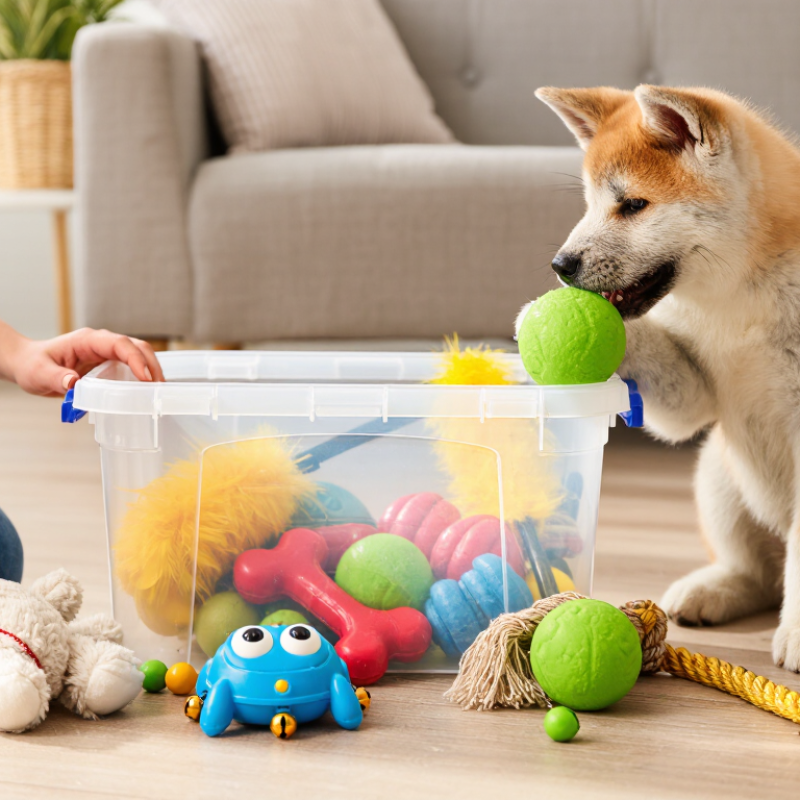
A pet toy becomes a potential choking hazard when its smallest part can fit completely inside a pet’s mouth. In practical inspections, the tempting mistake is checking only the toy’s original size. A large toy may release a small squeaker, plastic eye, rope strand, or rubber fragment after chewing. Round objects are especially concerning because they can seal the airway. Soft foam can also break into swallowable pieces. A useful test is simple: if a toy part can pass behind the pet’s back teeth, it may be too small.
The American Pet Products Association’s 2023–2024 National Pet Owners Survey estimates 65.1 million U.S. households own dogs and 46.5 million own cats. However, this report does not measure choking incidents. A retrospective veterinary review of 208 canine gastrointestinal foreign-body cases found that swallowed objects can require urgent treatment (Hayes, Journal of Small Animal Practice, 2009). The evidence is not toy-specific, but it shows why ingestion deserves attention. Inspect seams, knots, vents, and glued parts before every use. Discard toys with cracks, deep tooth marks, loose threads, or missing components. Puppies, aggressive chewers, and pets that swallow food quickly need closer supervision. I still misjudge new toys sometimes. A toy can look durable, yet fail within minutes. Size charts help, but they cannot replace watching how an individual pet chews. Pause play when the toy becomes wet, flexible, or smaller than intended.
Inspect every pet toy before giving it to your animal. The American Pet Products Association’s 2023–2024 National Pet Owners Survey estimates that 66% of U.S. households own a pet. That scale makes daily toy checks practical, not excessive.
Run your fingers across seams, knots, and stitched eyes. Look for loose threads, cracked plastic, exposed stuffing, or a squeaker that shifts inside. Press rubber parts gently. If they split, shed flakes, or feel unusually soft, remove the toy. Check the size against your pet’s mouth. A ball that fits fully inside can become a choking hazard.
Small bells, plastic pieces, and torn rope fibers deserve special attention. CPSC injury surveillance recorded about 231,700 toy-related emergency-department injuries among U.S. children in 2023, showing why detached parts should never be dismissed. Pet-toy data is less specific, but the physical risk is similar.
Watch how your pet plays. A quiet chewer may destroy fabric quickly; a strong puller may loosen a knot within minutes. Inspect toys again after washing, freezing, or outdoor use. I sometimes keep a “retired” box, though honestly, a damaged toy should leave the home, not wait there. Product labels can help, but they cannot predict your pet’s bite strength or habits. When uncertain, choose removal over one more play session.
A pet toy becomes a choking hazard when its size, shape, or condition allows swallowing or airway blockage. Choose a toy larger than your pet’s throat, but not so large that chewing becomes awkward. A practical check is to compare the toy with your pet’s open mouth. If the whole toy can disappear inside, it is too small. Puppies and strong chewers need different sizes, even within the same household.
Shape matters more than many owners expect. Avoid toys with narrow handles, tight loops, sharp corners, or detachable eyes and buttons. Hollow balls can be dangerous if they fit over the jaw and block breathing. Soft toys may also become risky after seams split. I once underestimated how quickly a determined chewer could remove a squeaker. That mistake changed how often I inspect toys.
Material safety includes strength, texture, and smell. Select non-toxic materials made for animal use, without peeling coatings or brittle plastic. Press rubber and flexible parts for cracks, then check for small fragments after play. A toy that leaves crumbs, splinters, or loose threads should be removed immediately. Supervise active chewing, especially with new toys. No inspection is perfect. Pets can damage a toy between checks, so look again when play becomes unusually quiet or destructive.
Breed is only a starting point. Jaw strength, mouth shape, age, and chewing style matter more. The APPA 2023–2024 National Pet Owners Survey estimates that 65.1 million U.S. households own dogs, while 46.5 million own cats. That variety makes one-size-fits-all toy advice unreliable. A toy for a gentle Maltese may split quickly under a powerful German Shepherd’s bite. A long, narrow toy may also sit awkwardly in a flat-faced dog’s mouth. Measure the toy against your pet’s mouth, not only its body weight. It should not fit fully behind the back teeth.
Watch the chewing session. Constant gnawers need dense, flexible materials with no detachable seams. Shredders need closer supervision. Cats that chase and carry toys may need lightweight designs without loose bells, feathers, or plastic eyes. The AAHA 2022 Canine Life Stage Guidelines support adjusting care for age, size, behavior, and health. Puppies and senior pets therefore need different textures. Soft is not always safer.
Check the toy after every use. Small cracks can become swallowed pieces. I once trusted a “durable” toy too quickly; the surface changed after two sessions. That was my mistake. If you see torn edges, missing parts, unusual gagging, pawing at the mouth, or repeated coughing, remove the toy and contact a veterinarian. Size matters. Chewing changes. A pet’s habits can shift with age, stress, dental pain, or boredom.
If your pet suddenly gags, paws at its mouth, or struggles to breathe, treat it as an emergency. Choking pets may produce little sound. Their gums can turn pale, blue, or gray. Call an emergency veterinarian while someone checks the animal. Keep your voice calm. Panic can make handling more difficult.
Tips: Hold the mouth open only if your pet allows it. Remove an object only when you can clearly see and grasp it. Never push fingers blindly into the throat. If breathing stops, begin pet CPR only if you know the technique. For a conscious, choking dog, veterinary professionals may recommend firm back blows or abdominal thrusts. Cats and small pets need gentler, modified movements. Ask the veterinarian to guide you by phone.
Even after the toy comes out, seek veterinary care. A sharp edge may have injured the throat. Small fragments can remain hidden. Watch for coughing, drooling, weakness, vomiting, or noisy breathing. Do not force food or water. I used to think a brief cough meant the danger had passed. That assumption can be wrong. A veterinarian can check for airway swelling or inhaled material, which may worsen later.
| Assessment dimension | What to check | Warning signs or factual indicators | Risk level | Recommended action |
|---|---|---|---|---|
| Toy size | Compare the toy with the pet’s mouth, jaw, and throat size. | A toy or removable part can fit completely inside the pet’s mouth or pass behind the front teeth. | High | Do not offer it. Choose a larger toy that cannot be swallowed whole. |
| Detached parts | Inspect eyes, bells, squeakers, plastic pieces, buttons, and glued decorations. | Parts are loose, cracked, partially detached, or small enough to swallow. | High | Remove the toy immediately and discard or repair it only if every part can be securely restored. |
| Tears and fraying | Check fabric seams, rope fibers, stuffing, and rubber edges. | The pet can pull out fibers, stuffing, threads, or chunks of material. | High | Replace the toy. Swallowed fibers or pieces may cause choking or intestinal obstruction. |
| Shape and flexibility | Look for toys that can become lodged, fold, or form a seal in the mouth or throat. | The toy is unusually hard, egg-shaped, ring-shaped, or can compress and expand. | Moderate to high | Use only with close supervision and remove it if the toy becomes lodged around the jaw or mouth. |
| Rope, string, and ribbon | Inspect for loose strands and monitor chewing behavior. | The pet is swallowing strands or the toy is unraveling. | High | Remove the toy. Do not pull string from the mouth or anus; contact a veterinarian promptly. |
| Chewing intensity | Consider whether the pet is a power chewer or rapidly destroys toys. | The pet breaks off pieces within minutes or guards and swallows fragments. | High | Use durable, appropriately sized toys only under supervision; inspect them before and after use. |
| Toy condition | Check for cracks, sharp edges, bite marks, missing pieces, and changes in texture. | The toy has become brittle, split, punctured, or significantly smaller. | Moderate to high | Replace damaged toys immediately; do not rely on age alone to determine safety. |
| Supervision | Observe the pet during play, especially with new, edible, or interactive toys. | The pet chews aggressively, gulps food-like toys, or plays with the toy without monitoring. | Moderate | Supervise play and remove the toy when the pet begins tearing, swallowing, or choking on pieces. |
| Possible choking symptoms | Watch the pet’s breathing and behavior. | Sudden gagging, repeated coughing, pawing at the mouth, distress, noisy breathing, inability to inhale, blue or pale gums, collapse, or loss of consciousness. | Emergency | Act immediately and contact an emergency veterinarian while arranging urgent transport. |
| Pet is conscious and breathing | Determine whether the pet can cough or breathe. | The pet is coughing or breathing but appears uncomfortable. | Urgent | Keep the pet calm, call a veterinarian, and do not force food, water, or medication. |
| Object is clearly visible | Look in the mouth only if it is safe and the object is easy to grasp. | The object is loose and positioned at the front of the mouth. | Emergency | Carefully remove it with fingers or blunt-ended tweezers only if it can be taken out easily. Never push it deeper. |
| Object is not visible or is deeply lodged | Do not probe the throat or perform repeated blind finger sweeps. | The pet is struggling to breathe and the object cannot be safely reached. | Life-threatening | Call emergency veterinary services and follow their instructions for pet choking first aid while traveling for care. |
| Pet becomes unconscious | Check responsiveness and breathing. | Collapse, no normal breathing, or no response to touch or voice. | Critical | Call an emergency veterinarian, begin pet CPR only if trained or instructed, and transport immediately. |
| After the object is removed | Continue observing breathing, gum color, energy, swallowing, and coughing. | Persistent cough, gagging, difficulty breathing, lethargy, vomiting, or painful swallowing. | Urgent | Seek veterinary examination even if the pet appears better; throat injury or material in the airway may remain. |
Inspect every toy before play. Check again after washing, freezing, outdoor use, or unusually rough chewing. Daily checks are practical.
Remove toys with loose threads, cracked plastic, exposed stuffing, torn ropes, or shifting squeakers. Missing pieces are a clear warning.
Compare it with your pet’s open mouth. If the whole toy can disappear inside, choose a larger one. Size matters greatly.
Avoid narrow handles, tight loops, sharp corners, and detachable buttons. A hollow ball may cover the jaw and block breathing.
Avoid peeling coatings, brittle plastic, splintering parts, and strong chemical smells. Flexible rubber should not shed flakes or crumbs.
Breed offers only a rough guide. Jaw strength, mouth shape, age, and chewing habits matter more than body weight.
Match texture and durability to the pet’s stage and habits. Puppies and seniors may need different textures. Soft is not always safer.
Stop play and remove the toy immediately. Do not keep it in a “retired” box at home. That only delays disposal.
Remove the toy after gagging, coughing, mouth pawing, or missing pieces. Contact a veterinarian if symptoms continue or swallowing seems possible.
No inspection is perfect. Pets can damage toys between checks. I once trusted a durable toy too quickly; that was a mistake.
Learning how to tell if a pet toy is a choking hazard starts with checking whether it has small, loose, or detachable parts that could fit inside your pet’s mouth or throat. Inspect the toy regularly for cracks, tears, broken seams, splinters, missing pieces, or damaged stuffing. Choose a toy with a size and shape that your pet cannot easily swallow, and avoid materials that become sharp, brittle, or dangerously soft when chewed.
A safe choice should also match your pet’s breed, age, jaw strength, and chewing habits. Strong chewers may need durable toys, while smaller pets require appropriately sized options. Always supervise play and replace toys as soon as they become damaged. If your pet appears unable to breathe, is gagging, pawing at the mouth, or suddenly becomes distressed, remove the toy only if it is clearly visible and easy to reach. Seek emergency veterinary help immediately, especially if the object cannot be safely removed or your pet shows continued breathing difficulty.

Wilsons Pets