Choosing an outdoor pet house is not simply a matter of finding a cute shape or matching your garden. The real question is what makes a pet house weatherproof for outdoor use? A reliable shelter must handle rain, wind, cold nights, summer heat, and changing ground conditions. It should keep the sleeping area dry without trapping stale, humid air.
Dr. Jennifer Coates, DVM, explains, “A shelter should protect a pet from the elements, while also supporting comfort, safety, and security.” That principle matters when comparing plastic, treated wood, and insulated composite houses. Look for a raised floor that keeps paws away from wet soil. Check for a sloped roof, sealed joints, and a doorway that faces away from prevailing wind. Small ventilation openings can reduce condensation, especially after a cold night.
Insulation matters.
However, no pet house is perfect for every climate. A thick wall may retain warmth during winter, yet become uncomfortable under strong summer sun. A wide entrance may help a large dog enter easily, but it can also invite rain and drafts. Measure your pet carefully, including shoulder height and sleeping length. The interior should allow turning, but excessive empty space may lose heat.
In practical use, inspect the house after storms. Touch the floor, check the corners, and notice whether bedding stays dry. These simple checks reveal weaknesses that product descriptions often miss. Weatherproofing is not a single feature. It is the result of suitable materials, careful construction, sensible placement, and regular maintenance.
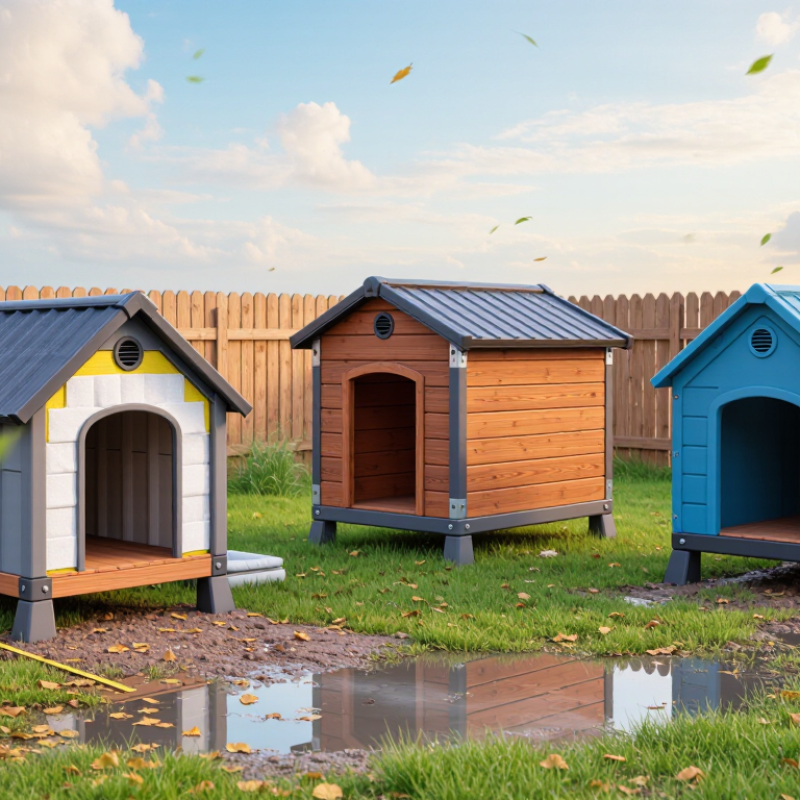
Choosing a weatherproof pet house starts with the animal, not the product label. Measure your pet while standing, turning, and lying down. The entrance should allow easy movement without leaving a wide opening for cold wind. Older pets may need a lower threshold. Small animals often need extra insulation because they lose body heat quickly.
Study the outdoor climate across all seasons. Heavy rain requires a sloped roof, sealed seams, and a raised floor. Snowy areas need strong insulation and enough height to prevent buried entrances. In hot regions, cross-ventilation matters more than thick walls. Shade is essential. A dark, enclosed house can become dangerously hot during a bright afternoon.
Look closely at your yard, too. Wind direction, flooding, mud, and falling branches can change the safest location. Place the house away from runoff, but keep it near a familiar sheltered area. I once chose a dry-looking corner that became muddy after one storm. That mistake changed my view of “weatherproof.” Materials should resist moisture, but they must also be non-toxic and easy to clean. Check for sharp edges, loose fasteners, and trapped water.
Your pet’s behavior provides useful evidence. A nervous animal may avoid a house with a narrow entrance. A heavy-coated dog may prefer airflow over extra insulation. Observe, adjust, and ask a veterinarian about pets with arthritis, breathing problems, or unusual temperature sensitivity. Practical testing often reveals what measurements miss.
| Assessment Dimension | Pet or Climate Condition | Recommended Pet House Features | Practical Selection Guidance |
|---|---|---|---|
| Pet body size | Small dogs or cats up to approximately 10 kg | Interior floor area of about 0.35–0.55 m²; entrance width around 20–28 cm | The pet should be able to stand, turn around, lie down, and enter without squeezing. |
| Pet body size | Medium dogs weighing approximately 10–25 kg | Interior floor area of about 0.55–0.90 m²; entrance width around 28–38 cm | Measure the pet from nose to tail base and add enough room for a natural resting posture. |
| Pet body size | Large dogs weighing approximately 25–45 kg | Interior floor area of about 0.90–1.40 m²; entrance width around 38–50 cm | Choose a structure with reinforced joints and a floor that will not flex under the pet’s weight. |
| Cold climate | Regular outdoor temperatures below 7°C, frost, or cold winds | Insulated walls and roof, a raised floor, a wind-blocking entrance, and a removable washable bed | Keep the interior dry and draft-controlled. Outdoor housing is not a substitute for bringing pets indoors during severe cold. |
| Hot climate | Daytime temperatures above 27°C, strong sun, or high radiant heat | A light-coloured roof, shaded placement, cross-ventilation, and a well-insulated ceiling | Avoid sealed designs that trap heat. Provide fresh drinking water and move the pet indoors during dangerous heat. |
| Heavy rain or snow | Frequent precipitation, wet ground, or seasonal snowfall | Sloped waterproof roof, sealed seams, raised floor, drainage clearance, and a covered entrance | Inspect roof edges and joints regularly because small gaps can allow water into insulation. |
| High humidity | Humid coastal or tropical conditions with limited drying time | Mould-resistant surfaces, elevated airflow beneath the house, rust-resistant fasteners, and removable panels | Use breathable bedding and dry the interior completely after rain or cleaning. |
| Strong wind | Exposed yards, open farmland, or areas with frequent gusts | Wide stable base, low centre of gravity, secure anchoring points, and a wind-facing entrance shield | Position the entrance away from prevailing winds and anchor the structure without creating sharp hazards. |
| Material durability | Year-round outdoor exposure | Exterior-grade wood with a pet-safe finish, UV-stable plastic, or corrosion-resistant composite materials | Avoid peeling coatings, treated surfaces that may be toxic if chewed, and materials with exposed sharp edges. |
| Ventilation | Any outdoor environment, especially warm or humid weather | Two or more protected ventilation openings positioned above the pet’s resting level | Openings should allow air exchange while preventing direct rain, snow, and strong drafts from reaching the bedding. |
| Floor protection | Wet soil, flooding risk, or frequent condensation | Floor raised at least 5–10 cm above the ground, with a non-slip and washable surface | Check that the raised base remains stable and does not create an access gap for pests. |
| Cleaning and hygiene | Pets that shed heavily, track mud, or spend long periods outdoors | Wide access door, removable roof or side panel, smooth sealed surfaces, and washable bedding | Clean bedding frequently and inspect for fleas, ticks, moisture, and damaged insulation. |
| Safety and supervision | Puppies, elderly pets, short-haired breeds, brachycephalic breeds, or pets with health conditions | Easy access, no exposed nails or gaps, stable construction, and weather monitoring | These pets may have reduced tolerance for temperature extremes and should not be left outside unattended in hazardous weather. |
Measure your pet while standing, turning, and lying down. The entrance should allow easy movement. Avoid excessive open space, which can admit cold wind.
Watch wind direction, flooding, mud, runoff, and falling branches. Choose a sheltered area near familiar surroundings. One dry-looking corner may become muddy after one storm.
Choose a sloped roof, sealed seams, and a raised floor. Snowy areas need extra height and strong insulation. Keep the entrance clear.
Prioritize cross-ventilation and reliable shade. Thick walls alone may trap heat. A dark house can become dangerously hot by afternoon.
Double walls with foam insulation can reduce sudden temperature changes. Small animals may need more insulation. However, thick walls without ventilation can cause stale air.
Moisture-resistant materials are useful. Durable plastic resists dampness, while treated wood may stabilize temperatures better. Wood needs checks for swelling, cracks, and hidden mold.
Push the corners gently and inspect the joints. Too much movement may indicate weak assembly. Screws often hold better than staples in windy areas.
Look for sharp edges, loose fasteners, trapped water, and gaps near paws or tails. Check the floor after heavy rain. A washable interior also helps manage muddy conditions.
Yes. Nervous animals may avoid narrow entrances. Heavy-coated dogs may prefer airflow. Observe, adjust, and consult a veterinarian for unusual temperature sensitivity.
Inspect it after the first heavy storm and during seasonal changes. Look for leaks, shifting panels, condensation, and wet flooring. Purchase measurements can miss real problems.
Choosing a weatherproof pet house for outdoor use in 2026 starts with understanding your pet’s size, age, habits, and the local climate. Consider exposure to rain, snow, wind, heat, and humidity, then select durable materials, reliable insulation, and sturdy construction that can withstand changing conditions. The house should provide enough room for your pet to stand, turn, stretch, and rest comfortably without being so large that body heat is lost. Proper ventilation and a practical interior layout are also important for airflow and comfort.
When asking what makes a pet house weatherproof for outdoor use, look for a raised floor, a sloped or covered roof, sealed joints, water-resistant surfaces, and protection from drafts. Safe entryways, smooth edges, secure placement, and resistance to outdoor hazards can further improve protection. Install the house in a sheltered, well-drained location, inspect it regularly, clean it as needed, and prepare it for seasonal changes by adding or adjusting insulation while keeping the interior dry and hygienic.

 Wilsons Pets