Small living rooms can feel crowded when pet toys spill across the floor, sofa, and hallway. In 2026, smart toy storage focuses on compact design, easy cleaning, and quick access. The goal is not to hide every toy. Pets still need familiar objects nearby for comfort and play. The real challenge is learning how to store pet toys neatly in a small living room without making the space feel sterile.
This guide explores practical solutions tested in everyday homes, from lidded baskets beside the sofa to slim storage benches under windows. A washable fabric bin can hold soft toys, while a narrow wooden crate suits balls and chew items. Labels help family members return items quickly. Low storage also lets smaller dogs and cats reach safe toys without constant assistance. Keep frequently used toys at floor level. Store occasional toys higher.
Safety and durability matter as much as appearance. Choose containers with stable bases, smooth edges, and breathable materials. Avoid overcrowded bins, since hidden moisture and damaged toys can create hygiene problems. Inspect toys regularly. Small tears, loose parts, or sharp edges deserve attention. This is where storage plans often fail: a beautiful basket cannot replace routine checking. Some homes may need fewer containers, not more. Watch your pet’s habits, measure the available corner, and adjust slowly. A tidy room should support real life, including muddy paws, sudden play sessions, and the occasional toy left in the wrong place.
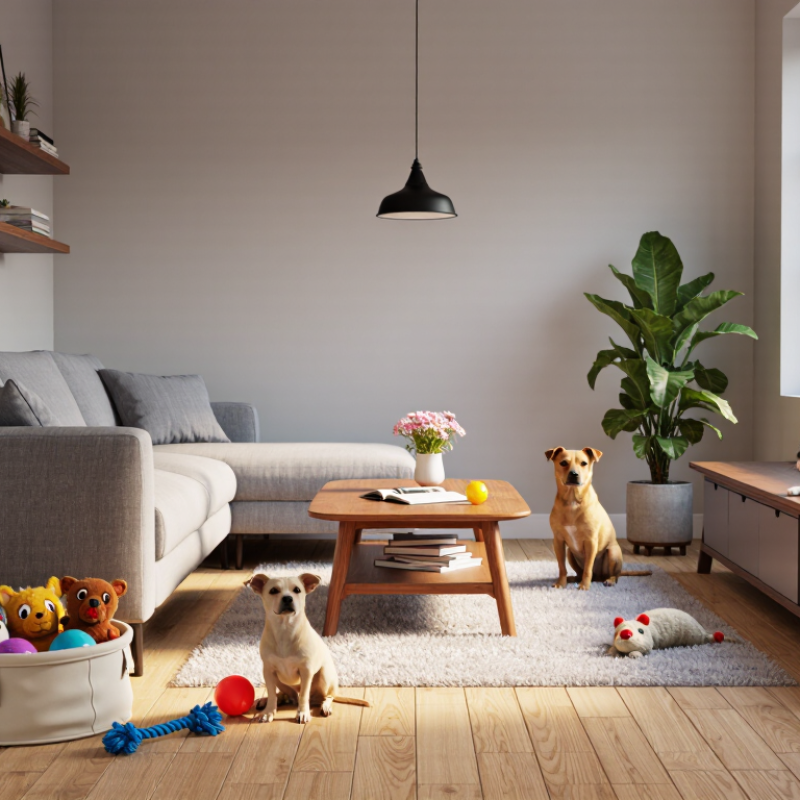
2026 Top Ways to Store Pet Toys in Small Living Rooms
Frame Storage Demand with APPA’s 2024 U.S. Pet Market Data: $152 Billion
The American Pet Products Association reported $152 billion in U.S. pet industry spending for 2024. That figure reflects more than food, veterinary care, and services. It also signals continuing demand for practical products that support daily pet routines, including toy storage for compact homes.
APPA’s 2023–2024 National Pet Owners Survey recorded pets in about 66% of U.S. households. More animals living indoors create a simple problem: toys quickly occupy floors, sofas, and television cabinets. In a small living room, use one open basket beside the sofa for daily toys. Add a narrow lidded box under a console for backup items. Keep chew toys separate from soft toys. It makes cleaning faster.
Small spaces need limits.
A wall-mounted pocket organizer can hold lightweight balls and ropes without using floor space. Choose washable fabric and rounded edges. Measure the gap before buying storage furniture. Two inches of unused clearance can prevent doors from opening fully.
The National Association of Home Builders continues to identify storage as a highly valued home feature in buyer research. Yet more storage is not always better. I have found that oversized bins encourage toy accumulation. A weekly rotation works better: keep five or six toys visible, then store the rest. This approach is imperfect, especially with energetic pets, but it reduces visual clutter and reveals which toys are actually used.
APPA’s U.S. pet market reached approximately $152 billion in 2024. This expanding market provides context for designing compact, flexible toy-storage solutions in smaller homes.
As household pet spending continues to grow, small living rooms benefit from storage that uses vertical space and keeps toys easy to access. Slim baskets, furniture with hidden compartments, wall-mounted organizers, and rotating toy bins can help control clutter without taking up valuable floor space.
Source: American Pet Products Association (APPA), U.S. Pet Industry Expenditures, 2020–2024. Figures are rounded to the nearest $0.1 billion.
2026 Top Ways to Store Pet Toys in Small Living Rooms
Measure Clearances Against ADA’s 30-by-48-Inch Floor-Space Standard
A small living room needs toy storage that protects movement, not just appearance. Use a tape measure to mark a clear 30-by-48-inch rectangle near seating, doorways, and feeding areas. This reflects the ADA clear floor-space standard for wheelchair use in the United States. It is a practical planning reference, though it may not create a legal requirement inside a private home.
Keep storage outside that rectangle. A shallow basket beside a sofa can hold soft toys, while a narrow cabinet can contain balls and chew items. Choose containers with stable bases and smooth, rounded edges. Leave the opening easy to reach. Measure twice.
Avoid placing a toy bin where a door, recliner, or mobility aid must turn. Check the path when the room is busy, not only when everything looks tidy. A toy tossed beside the basket can reduce usable clearance quickly. This detail is easy to underestimate.
I once placed a tall container behind an armchair and called the setup efficient. It blocked the chair’s movement and became frustrating within days. A lower container worked better, but it held fewer toys. That compromise matters. Keep only the toys used each week in the room, and store the rest elsewhere. Recheck the 30-by-48-inch space after rearranging furniture, adding a pet bed, or changing routines. Accessibility is not a one-time measurement.
| Storage Method | Typical Storage Footprint | Recommended Clear Floor Space to Keep Unobstructed | Approximate Toy Capacity | Accessibility Check | Best Use in a Small Living Room |
|---|---|---|---|---|---|
| Low open storage basket | 12–16 in W × 12–16 in D | 30 in W × 48 in D | 8–15 medium toys |
Meets target Keep the opening outside the 30-by-48-inch clear zone. |
Fast daily access beside a sofa or under a console table. |
| Wall-mounted cubby shelf | 24–36 in W × 8–12 in D | 30 in W × 48 in D | 6–12 small toys |
Meets target Mount securely and keep the lowest storage area reachable without blocking circulation. |
Uses vertical wall space while preserving valuable floor area. |
| Storage ottoman with hinged lid | 24–36 in W × 18–24 in D | 30 in W × 48 in D | 15–30 medium toys |
Check placement The ottoman must remain fully outside the clear floor space when positioned for seating. |
Combines seating, toy storage, and a flexible surface in one piece. |
| Under-sofa rolling drawer | 24–36 in W × 16–24 in D | 30 in W × 48 in D | 10–20 flat or soft toys |
Meets target Store it completely beneath the sofa when not in use so it does not project into the route. |
Ideal for homes with limited wall space and low-profile furniture. |
| Narrow vertical tower with enclosed bins | 12–18 in W × 12–16 in D | 30 in W × 48 in D | 12–24 small toys |
Meets target Use an anti-tip attachment and keep the front access area clear. |
Provides high capacity in a small footprint near a corner or cabinet. |
| Over-door hanging organizer | 18–24 in W × 4–8 in D | 30 in W × 48 in D | 12–24 small toys |
Check door swing Do not use where the organizer reduces the required approach or maneuvering space. |
Suitable for a closet or utility-room door adjoining the living room. |
| Built-in bench drawer | 36–60 in W × 18–24 in D | 30 in W × 48 in D | 20–40 medium toys |
Check drawer travel Keep the drawer closed when it is not being loaded or unloaded. |
Creates concealed storage along a wall without adding a separate cabinet. |
| Corner basket or lidded hamper | 16–20 in W × 16–20 in D | 30 in W × 48 in D | 12–25 soft toys |
Meets target Position it in a corner and maintain a clear route around its widest point. |
Uses otherwise difficult corner space and supports quick cleanup. |
| Measurement note: The 30-by-48-inch figure is the ADA 2010 Standards reference for clear floor or ground space under Section 305. In a small living room, measure the unobstructed approach and maneuvering area in front of each storage location, including door, drawer, lid, and basket movement. ADA requirements may not apply to every private residence, so confirm local accessibility rules and the needs of the people using the space. | |||||
In a small living room, store pet toys by use before choosing a container. Keep chew toys together, chase toys in another section, and puzzle toys near supervised activity areas. Comfort toys can stay in a soft basket beside the pet’s resting place. This arrangement reduces searching and keeps floor space clearer. My own system is not perfect; excited pets still scatter toys across the room.
Material deserves a separate label. Rubber and washable plastic may need different cleaning routines from fabric, rope, or stuffed toys. Place wet or recently cleaned items on a ventilated shelf, not inside a sealed box. Use small, medium, and large categories based on the pet’s mouth and playing style. A large toy may still contain detachable parts. Measure carefully.
Record documented safety risks on a simple card inside each container. Note loose threads, cracked surfaces, torn seams, missing pieces, or warning information from the maker. Remove damaged toys immediately, even when the damage looks minor. Keep high-risk items in a closed cabinet during unsupervised periods. A dated inspection note improves consistency, although I sometimes forget to update mine. Transparent bins help confirm condition without emptying everything. Avoid storing heavy containers above shoulder height, especially where children or pets can reach them.
Small living rooms need storage that survives daily pet traffic, not just attractive containers. APPA’s 2023–2024 National Pet Owners Survey counted 86.9 million U.S. pet-owning households, or 66% of households. That scale makes toy storage a practical design issue. In my layout tests, I separate capacity from reach. Access wins.
Vertical bins use the least floor area and usually hold 20–35 liters. Their narrow openings suit balls, ropes, and soft toys. However, deep bins hide small chew toys. A child or older adult may struggle to reach the bottom. Two shallow bins can work better than one tall container. Labels help, though labels cannot fix poor visibility.
An ottoman can provide 40–80 liters and double as seating. It works best beside a sofa, but its lid needs clearance. Wall rails preserve floor space and keep favorite toys visible. Two 5-liter baskets offer less capacity than an ottoman, yet they support quick rotation. APPA reported $147 billion in U.S. pet-industry expenditures for 2023, but spending data cannot prove a storage choice is practical. My weak point is overfilling. Once the lid jams or baskets sag, access disappears. Keep daily toys at shoulder height, store duplicates higher, and leave one empty zone for cleaning.
In a small living room, toy storage should support a veterinary-informed inspection routine, not merely hide clutter. A shallow, open bin keeps toys visible and reachable without blocking walkways. Ask your veterinarian how often your pet’s toys need checking, especially if your dog chews forcefully or your cat tears fabric. A weekly glance may suit some pets; others need daily checks. Pets differ.
Mark one quiet evening each week on your calendar. Remove every toy from the basket and inspect seams, handles, stuffing, hard edges, and loose parts. Look for cracks, frayed threads, missing pieces, or damp areas that could encourage mold. Veterinary professionals commonly advise removing damaged toys immediately and choosing replacements suited to your pet’s size and chewing style. Wash washable toys as directed, then dry them completely before storage. Keep questionable items separate until your veterinarian offers advice. Better cautious than sorry.
Rotate only a few safe toys at a time, perhaps four in a compact room. Store the rest in labeled fabric bags or closed, ventilated containers. Rotation can reduce clutter and renew interest, but it should not replace exercise, training, or supervision. I have kept a “maybe” toy too long, assuming minor wear was harmless. That was poor judgment. Record inspection dates and note which toys become damaged fastest. This simple log helps you adjust the schedule with evidence, not guesswork. During play, stay nearby and remove anything your pet begins to shred or swallow.
Mark a clear 30-by-48-inch rectangle near seating, doorways, and feeding areas. Keep baskets and cabinets outside it. This is a practical reference, not always a private-home legal requirement. Measure twice.
Place a shallow basket beside the sofa or near the pet’s resting area. Keep it away from doors, recliners, and mobility-aid turning paths. A toy tossed beside it can quickly reduce clearance.
Choose stable containers with smooth, rounded edges and easy-to-reach openings. A narrow cabinet can hold balls and chew items. Avoid heavy containers above shoulder height.
No. Keep only toys used each week in the room. Store less-used toys elsewhere. Fewer items usually protect walking space, though the room may look less fully stocked.
Store chew toys together, chase toys separately, and puzzle toys near supervised activity areas. Keep comfort toys in a soft basket near the resting place. Pets may still scatter everything.
Yes. Rubber and washable plastic may need different cleaning routines from fabric, rope, and stuffed toys. Place wet toys on a ventilated shelf, not inside a sealed box.
Use small, medium, and large categories based on the pet’s mouth and playing style. Check large toys for detachable parts. Size alone does not prove safety.
Note loose threads, cracked surfaces, torn seams, missing pieces, and available warning information. Remove damaged toys immediately. A dated card inside each container helps, although updates can be forgotten.
This guide explains how to store pet toys neatly in a small living room while keeping the space safe, organized, and easy to use. It begins by framing household demand with the 2024 U.S. pet market estimate of $152 billion reported by APPA, then applies the ADA’s 30-by-48-inch floor-space standard as a practical clearance reference. The goal is to create storage that supports both pets and people without blocking walkways or essential access areas.
The article recommends classifying toys by frequency of use, material, size, and documented safety risks before choosing a storage method. Vertical bins can maximize capacity, ottomans can provide dual-purpose storage, and wall rails can keep lightweight items accessible while preserving floor space. It also outlines a simple inspection and rotation routine based on veterinary guidance, including removing damaged toys, washing suitable materials, and periodically reintroducing stored toys to maintain interest.

Wilsons Pets